Crises Explained · Explainer
The DEC Explained
One joint appeal, fifteen UK aid charities and three strict tests: how the DEC decides when to ask the public for help and where the money goes.
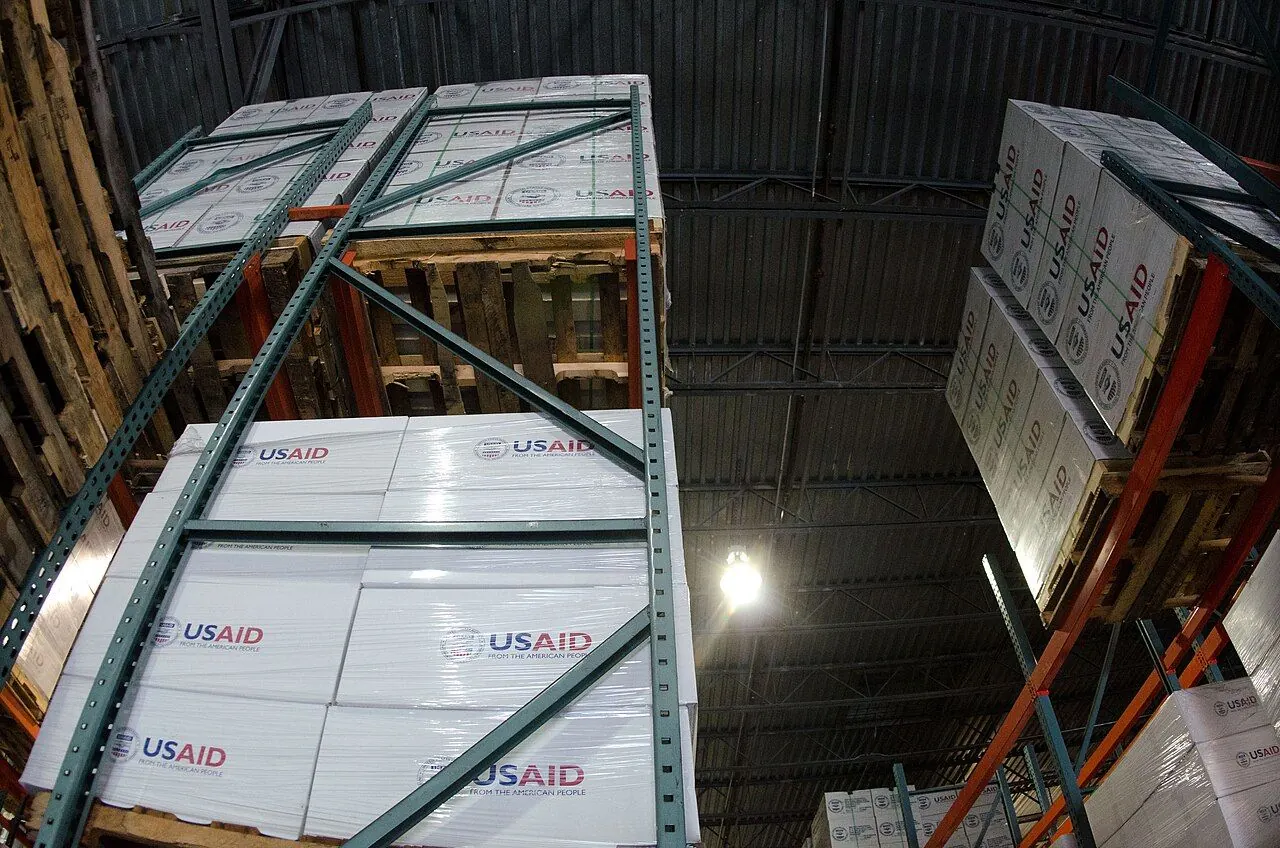
Photo: U.S. Department of Agriculture / Wikimedia Commons, Public domain
The Disasters Emergency Committee (DEC) is a UK charity that brings together 15 leading UK aid charities to raise money quickly when a humanitarian crisis strikes overseas. Instead of each charity appealing separately, the DEC runs one joint appeal, broadcast across the main television channels, and shares the money between its members.
The DEC was founded in 1963, after a cyclone in what is now Sri Lanka showed that broadcasters could face competing requests from separate relief agencies. Its members are Action Against Hunger, ActionAid, Age International, British Red Cross, CAFOD, CARE International UK, Christian Aid, Concern Worldwide, the International Rescue Committee, Islamic Relief, Oxfam, Plan International UK, Save the Children, Tearfund and World Vision. Its board of trustees is made up of the chief executives of the member charities plus independent trustees. The DEC is a registered charity in England and Wales (number 1062638) and a company limited by guarantee.
When and how an appeal is launched
The DEC does not launch an appeal for every disaster, or even for every major one. An appeal is launched only when three tests are met: the disaster is on such a scale and of such urgency that it calls for swift international humanitarian assistance; DEC member charities, or some of them, are in a position to provide effective and swift assistance at a scale that justifies a national appeal; and there are reasonable grounds to conclude that a public appeal would be successful. Crises in countries with strong capacity of their own, or crises with little public awareness, often do not get a DEC appeal, because launching one is costly.
When an appeal goes ahead, the DEC's Rapid Response Network of national media and corporate partners swings into action. Appeals have been broadcast on the BBC, ITV, Channel 4, Channel 5 and Sky, usually after the evening news, with radio appeals through the day. The appeal is named after the disaster, such as the "Turkey-Syria Earthquake Appeal", and members then work together in an intense period of collective fundraising.
Where the money goes and how it is checked
Money is shared between members using a formula the DEC calls the Indicator of Capacity. It is updated every year and takes into account how much each member spends on emergency relief and recovery overseas and its UK fundraising capacity; no member receives more than 20% of the funds available and none less than 3%. Spending is split into two phases: at least 30% of each allocation must be spent in the first six months, mostly on emergency aid, and the rest goes on recovery and rebuilding over up to three years.
Members report on progress and spending at regular intervals, and the DEC's Accountability Framework rests on four pillars: a quality standards audit, appeal-specific reporting, independent external evaluation of programmes, and learning. Independent reviewers can visit the affected region within months of a launch to recommend changes while the response is still under way, and evaluations are published on dec.org.uk. Members also commit to the Core Humanitarian Standard on Quality and Accountability.
For some appeals the UK government adds money through UK Aid Match, a scheme now run by the Foreign, Commonwealth and Development Office. When it applies, the government matches public donations pound for pound up to a set limit, which differs from appeal to appeal and is announced on GOV.UK and dec.org.uk.
How to give safely
Give through the official website, dec.org.uk, or the donation routes it lists, rather than links in unsolicited messages or social media posts. You can check the DEC's charity number on the Charity Commission register, and, if you are a UK taxpayer, tick the Gift Aid box so that the appeal can claim an extra 25p for every £1 you give. If you are asked for money in the DEC's name in a way that looks wrong, report it to Report Fraud, the service that replaced Action Fraud, online or on 0300 123 2040; in Scotland, contact Police Scotland on 101.
General information, checked against the sources below at the time of writing. Rules and tax reliefs change; confirm with GOV.UK, the regulator or the organisation concerned before you rely on them. Relief Weekly is a magazine, not a charity, and does not collect donations.