Giving · Guide
Spotting Charity Scams
Fake appeals follow every big disaster; a registered number, a licensed collector and a Fundraising Badge are the quickest ways to tell them apart.
Photo: Mike Phillips / Wikimedia Commons, CC BY-SA 3.0
Before you donate to a disaster appeal, always check the charity is genuinely registered and follow official advice. Most fundraising is genuine, but fraudsters take advantage of public generosity when giving rises, so make a few quick checks and report anything suspicious.
How fake appeals try to look real
The Charity Commission and the Fundraising Regulator warn that fraudsters use fake appeal websites, email appeals that falsely use the name of genuine charities, and appeals from groups claiming to be charities. Fake charities often look like the real thing:
- Names that sound very similar to a well-known charity
- Emails, texts and social media posts with links to donation pages that do not belong to the charity
- Street or door-to-door collectors without a licence, with photocopied or hand-written ID badges, or with tins that show signs of damage
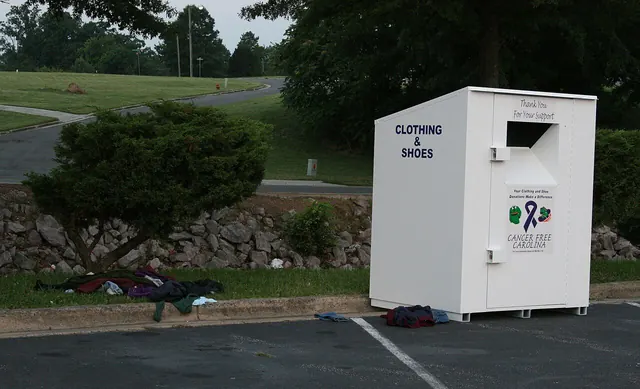
- Clothing collection bags that do not show the charity's name and registration number, or the collecting company's name, registration number and place of registration
- Phone calls from a number that cannot be identified, often with pressure to give straight away
Pressure is a warning sign in itself. Official advice is never to feel pushed into donating immediately: ask the collector for more information and, if in doubt, give later and directly at a time that suits you.
Check the charity first
Go to the charity register at gov.uk/checkcharity and verify the charity name and number are correct before donating. Most charities with an annual income of £5,000 or more must be registered in England and Wales; Scotland and Northern Ireland have their own registers, kept by the Office of the Scottish Charity Regulator and the Charity Commission for Northern Ireland. Fundraising materials should show the charity's name, registered charity number and a telephone number.
Look for the Fundraising Badge, the logo that says "registered with Fundraising Regulator", and check the Fundraising Regulator's Directory of organisations committed to its Code of Fundraising Practice. A face-to-face collector should have a licence from the local authority licensing team, or from the Metropolitan Police in Greater London.
Pay safely. Make sure the charity is genuine before giving any financial information, be careful with links in emails and messages, and check that any link to a donation page comes from a reliable source. If a caller asks for bank details, hang up and ring the charity back on a number from its official website. After a disaster, the regulators suggest giving to established charities with experience of emergencies or to a Disasters Emergency Committee (DEC) appeal, and sending money rather than donated goods.
If something looks wrong
If a charity looks fake, do not make the donation. If you think a collection or appeal is fraudulent, report it to Report Fraud, the service that replaced Action Fraud, online or on 0300 123 2040; in Scotland, contact Police Scotland on 101. Take photos of collection bags, leaflets or web pages so you have a copy of the wording, numbers and contact details. If you think a collector does not have a licence, tell the local authority licensing team or, in Greater London, the Metropolitan Police, and let the genuine charity know if you can. Concerns about how a registered charity is run go to the Charity Commission, and complaints about fundraising practice go to the Fundraising Regulator.
The most important thing is always to check the registered number, the contact details and the collector's licence and badge. If you are not sure, do not donate; if in doubt, find the charity's own website yourself and give from there.
General information, checked against the sources below at the time of writing. Rules and tax reliefs change; confirm with GOV.UK, the regulator or the organisation concerned before you rely on them. Relief Weekly is a magazine, not a charity, and does not collect donations.