HomeArchiveAid & DevelopmentTwenty Questions to a Relief Charity
From the archive · Q&A
Twenty Questions to a Relief Charity
How a small UK relief charity answered its donors: relief or development, choosing projects, receipts, used clothing and gifts in kind.
From the archive. Around 1998 to 2001 this web address carried the website of a small UK relief charity. This page keeps one of its items as a historical record. Relief Weekly, which publishes the site today, is an independent magazine with no connection to that charity; its name, the names of its staff and supporters, addresses, telephone numbers, registration details and donation forms have been removed, and lost pictures have been replaced with credited photographs of the places concerned. Nothing here is a current appeal.
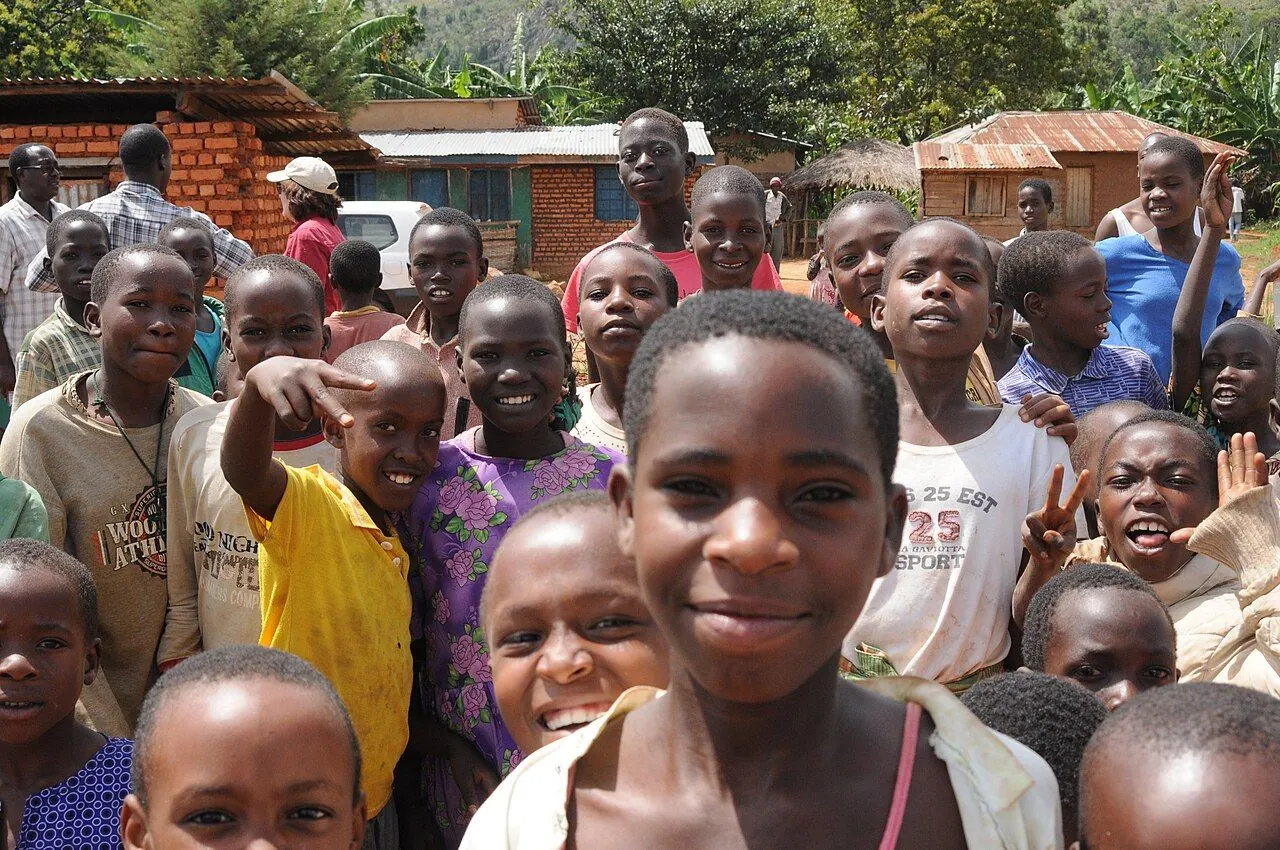
Pictured today: Photo: SuSanA Secretariat / Wikimedia Commons, CC BY 2.0
The charity answered twenty questions its donors often asked. The answer about who led the charity has been left out, because it described a private individual.
What is the charity? When did it start?
The charity started in the United States back in 1974 as one of the first Christian outreaches into two of the world's most troubled regions: drought-stricken Africa and flood-ravaged Bangladesh. The charity started in 1994 with five special focuses: orphan aid for Burundi and elsewhere in Africa, community development in Romania, projects for mothers and young children in the Caribbean Basin and Latin America, and relief, both emergency and long-term.
The charity is a non-denominational Christian outreach. Our donors come from all kinds of churches and denominational backgrounds. The charity was registered with the Charity Commission.
What makes different from other organizations?
We don't criticise groups which share our goals - it doesn't befit a Christian ministry.
However, we are unique in how we make each donated pound do the greatest good:
Delivering practical aid is our main activity. We don't work where local officials hinder us from doing the very best job possible for the people we help. Our overheads are kept low, thanks in part to our innovative "gifts-in-kind" programmes with businesses and other outreaches putting surplus food and other goods to work helping the needy.
Do you work with other organisations?
Often, but always with discretion. We prefer to work with Christian organisations but will gladly work with others who do not impose uncomfortable limits or expectations on how we conduct our efforts.
We fully appreciate the strengths and resources of other organisations as we hope they will appreciate ours. In most instances co-operation between organisations is essential for long-term success in helping the needy.
Do you help everyone in need?
As much as our resources allow. We give aid based on need, not on race, religion, or other external criteria.
What's the difference between "relief" and "development"?
Relief is short-term assistance - for example, after a disaster. Development involves longer, more complex projects to improve living conditions. Our work to deliver food to famine victims is relief, our shipments of seeds so farmers can grow more crops is development.
One way to describe the difference is the parable of the starving man who wanted a fish dinner. Should we give him a fish to eat (relief)? Or do we teach him how to fish (long-range relief)? Even better, do we also teach the man how to own his boat and the lake (development)? All aspects are important in most situations we face.
How does the charity choose its projects?
We use five basic criteria:
Accessibility: Are the people we want to help willing to accept our help? Could local laws or customs keep us from helping others?
Availability: Are the human, financial and material resources we need available to us?
Affordability: When an opportunity to help comes along, do we have the needed resources? Can we link our strengths with the efforts of other trusted agencies, and thereby share the responsbility?
Accountability: Can we be certain that our efforts reach the people we intend to help?
Appropriateness: Is the proposed project an excercise appropriate for Christians, and does it reflect the interests and world-view of our donors?
What happens if the charity gets more resources than it needs for a particular project?
When this happens, our Board of Directors will choose from several options available to us:
We may reassign any surplus to other ways we aid people.
We can put surplus funds in our Emergency Fund, an immediate reserve for disasters and other unexpected needs.
In an extreme case, we would contact our donors who "pushed us over the top" in our goal and offer them a choice of several alternative projects.
Will you disclose your finances?
Yes. We are always willing to disclose our finances to our donors. Our Annual Report details our activities. This may be obtained by writing or calling our London office. The charity seeks a high level of moral and legal integrity, managing your contributions as though they are gifts of God's own money.
Do you believe fund-raising costs should be kept as low as possible?
Yes. Our purpose is to help people, not to support fundraising activities, even if those activities are essential.
Why do you send newsletters? Might other methods be better?
We believe our newsletters should offer you several important opportunities:
To learn more about specific problems in the world.
To invite you to participate in solutions to these problems, primarily through prayer and financial support.
We are always evaluating the best methods for raising funds, ways which are dignified and communicate accurately. And methods which do not intrude on your private time. As a young UK charity, we do not yet have the resources for some other traditional activities such as charity shops and street collections.
How do you measure "effeciency" when raising funds?
We want to hold fund-raising costs to a minimum. This is one reason we seek competitive bids on all such projects. But whether we can be as efficient as we'd like also depends on economic forces outside the charity control. Is the UK economy strong? Is it tax season for our donors? Do the BBC and other media prominently report relief needs?
Will I get a receipt for my donations?
If you request, we will certainly acknowledge your gift with a receipt as well as our sincere thanks.
How do you report on the charity activities?
We publish a special Donor Report for everyone supporting our efforts, and you will receive a copy of the latest issue when it is printed.
Can I donate clothing and other personal items to the charity?
Unfortunately we can't accept such donations from individuals, for several reasons.
In many places local health regulations require that used clothing be cleaned before it can be distributed. We do not have resources to preclean clothing.
Used clothing must be sorted before it can be distributed. We do not have either the staff or warehouse facilities to sort huge piles of clothing.
Even when people are in need, cultural considerations must govern such donations. Certain garments would be impractical in some living situations - like dressy women's shoes in a refugee camp.
If a church or other group wishes to collect clothes and assume responsibility for cleaning and sorting, we can help that group make certain its efforts reach needy people. Otherwise we encourage you to donate such items to local charities or charity shops near your home.
I feel guilty sometimes when I can't contribute as regularly as I'd like. Is this feeling wrong?
Yes, it is wrong. We realise that every donor can't give to every need. Yet every appeal is important - especially to the people we are targeting for our help.
But we also want our donors to know how we are helping others especially with new projects. That way our donors can add their prayer support to our efforts. The Bible reports that the effectual fervent prayer of a righteous man availeth much (James 5:16). We believe that. Each newsletter offers you a chance to pray, and an opportunity to give. Both are equally important.
Does the charity deliver non-sectarian aid?
Absolutely. We firmly believe that our projects are valid examples of faith and deeds working together. All our projects help people on a non-sectarian basis. We believe that the Bible illustrates God's love being freely given, without first expecting confession of faith.
How do you "stretch" the value of each pound I give?
Sometimes we can stretch each donated pound's "helping power" to at least 10 times its face value. Here's one way this can work. If children in Africa need food and you respond with a £25 gift, we can either
take your gift to an African market and buy some food or...
combine your gifts with others and deliver a truckload of donated food at a fraction of the cost.
By paying only procurement, shipping and distribution costs, we can multiply your gift into a much more powerful source of help to the needy. Some outreaches prefer to "go to the market" for needed goods. Sometimes we do this as well. However, combining cash gifts with corporate donations usually delivers much more aid than would otherwise be possible.
Our company would like to donate goods. How can we do this?
Please send a brief letter (including your fax number) to our London office, outlining
the kind and quantity of goods to be donated;
the condition of these goods, including labelling and packaging;
data on expiration dates and shelf life;
any other restrictions such as prohibited countries; and
the location of the supplies and shipping condition (palletised, etc.).
Our staff will get back to you with our initial response, which will probably include some more specific questions. While all offers are appreciated we can't accept every gift-in-kind donation, sometimes because we either lack shipping resources or appropriate accountability for certain products (such as prescription medications) in targeted countries.
Can I volunteer to visit a the charity project, perhaps to work there for a while?
Such visits may be possible, but at the volunteer's own expense. The charity sends volunteers only after an extensive exchange of correspondence with our potential volunteer including personal and professional references, a medical evaluation and interviews with the charity staff. Our work is personally satisfying but often under extremely stressful conditions. We must be certain that our project and its potential volunteers are right for each other. Otherwise we risk performing a disservice to both our volunteers and our beneficiaries.